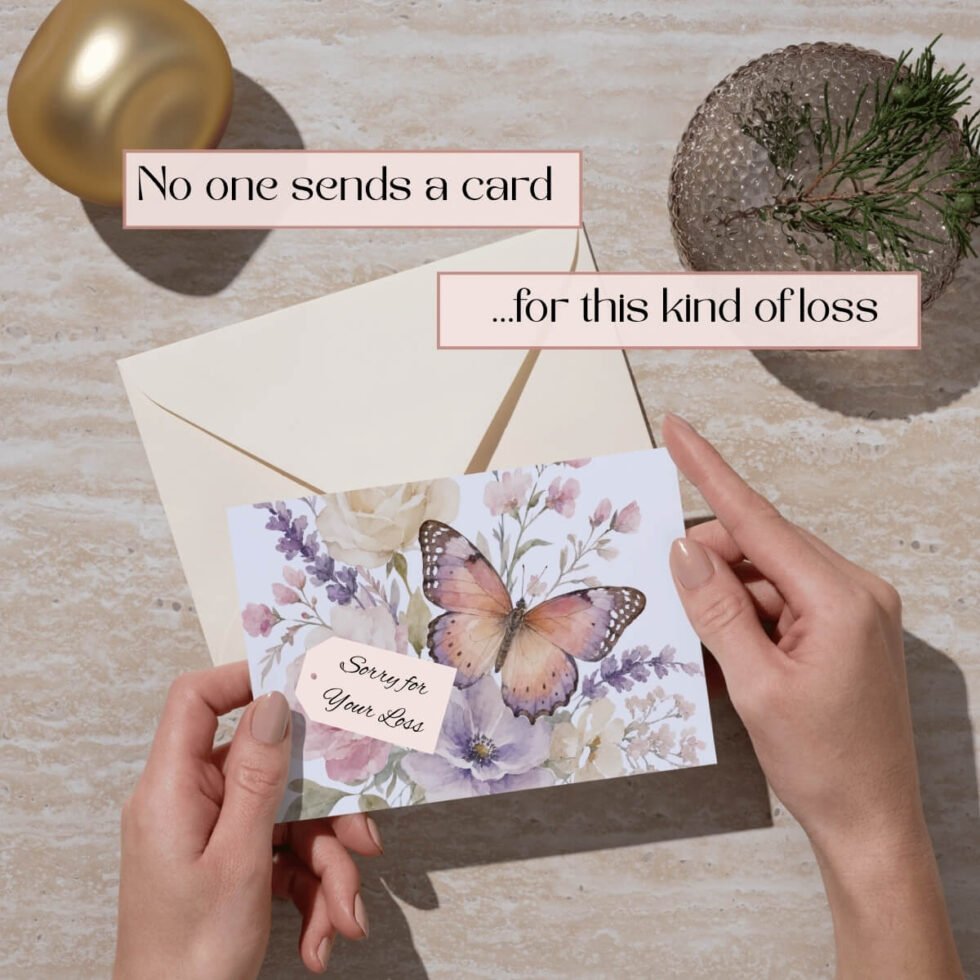
The Grief No One Sends a Card For
No one brings a casserole when a friendship quietly fades. No one checks in the week your last child moves out, even though the house sounds different now. No one marks the end of a job that used to feel like part of who you are.
We save the word grief for the losses everyone can see. A death. A diagnosis. A divorce that made it all the way to paperwork. But so many of the endings that reshape a woman’s life arrive without any ceremony at all. They come with silence. And silence has a way of convincing you that you are not allowed to feel this.
You are.
A real loss, even when it has no name
There is a term for this. Disenfranchised grief. It is the grief that no one around you quite recognizes, so no one thinks to acknowledge it. The empty nest. The retirement that was supposed to feel like freedom. The season of caregiving that ends, leaving you unsure what your days are for. The business you finally closed. The move away from a place that held your whole history. The slow drift of a friendship that never had a falling out, just a fading.
None of these come with a card. And yet each one asks something real of you. When a chapter closes, a version of your life closes with it, and that is worth mourning, whether or not anyone else can see it.
Why it catches you off guard
Here is what makes this kind of grief so disorienting. Often you are not grieving a person. You are grieving a role.
For years, maybe decades, a role told you who you were. The mother whose kitchen everyone gathered in. The one in charge of the project. The wife in a marriage. The expert in the room. That role did more than fill your calendar. It answered the question of what you were for. And when it ends, the loss is real, even when everyone around you expects you to feel relieved.
So if you have felt a sadness you cannot quite explain, or a flush of guilt for grieving something you think you should be glad about, hear this clearly. You are not ungrateful, and you are not overreacting. You are grieving an identity. That is allowed, and naming it is the first step out of the fog.
“You are not ungrateful, and you are not overreacting. You are grieving an identity.”
What happens when you rush past it
The temptation is to skip this part. To stay busy, to look on the bright side, to fill the space before you have to feel it. But rushing past grief does not make the next chapter start any sooner. It just means you walk into it still carrying what you never set down.
Unnamed grief does not disappear. It leaks out sideways, as restlessness, as a short fuse, as a low hum of numbness, or as a busyness that never quite settles. Naming the loss, plainly and kindly, is what begins to release it.
A few gentle ways to tend it
You do not need to make a project of your grief. You only need to stop treating it as a problem to outrun. A few small things help.
Name it out loud. Say the sentence, even if only to yourself: “I am grieving this.” Naming is not wallowing. It is the opposite. It is telling the truth so the feeling has somewhere to go.
Give the ending a small ceremony. Take five quiet minutes and finish two sentences on paper. “What I am letting go of is…” and “What it gave me that I get to keep is…” Naming both, the loss and what it leaves behind, is often what lets you set something down.
Let one safe person witness it. Grief that no one else recognizes heals partly by being seen. You do not need advice. You need one person who will simply say, that was a real loss, and I see it.
Separate the role from the self. The role is gone. You are not. Underneath every title you have ever held is a woman with a particular way of seeing, caring, and contributing that no ending can take from you.
“A chapter can end without fanfare and still deserve to be honored.”
A capter ended. You did not.
Grieving a quiet ending is not a detour from moving forward. It is how you free your hands to carry what comes next. When you let yourself mourn what was, honestly and without apology, you stop dragging it behind you and you make room for what is still ahead.
A chapter can end without fanfare and still deserve to be honored. So if something in your life has quietly closed, and you have been telling yourself it was not big enough to grieve, let this be your permission. It was. And you are allowed to feel it before you move on.
If you are standing in one of these quiet endings and you are not sure where you are right now, that is worth naming too. My free What Now? Assessment takes about five minutes and helps you see which of four places you are standing in, so your situation feels less like fog and more like a starting point. Take it here: Free Assessment. And if you would like to talk it through, I offer a complimentary Next Step Conversation. No pressure, just a real conversation about where you are and what might come next.
P.S. If you would rather sit with it privately first, my book “What Now?” walks through all four places and the next step that fits each. It is on Amazon in ebook and paperback: Amazon Link



Add A Comment
You must be logged in to post a comment.